
PDF
Read as a PDF
This article is also available as a PDF with the same content, for printing, saving or sharing.
Download this article as a PDFSection 1
1. Introduction: rate-limiting factors and oxygen supply in bioremediation
As a method of remediating oil-contaminated soil and groundwater, bioremediation is attracting attention as a low-cost, sustainable and environmentally friendly approach.
In oil bioremediation, the minimum conditions are that suitable microorganisms are present and that they come into contact with the substance to be degraded (the oil); in addition, the microorganisms need oxygen and nutrients (nitrogen, phosphorus, potassium) dissolved in water (Figure 1).
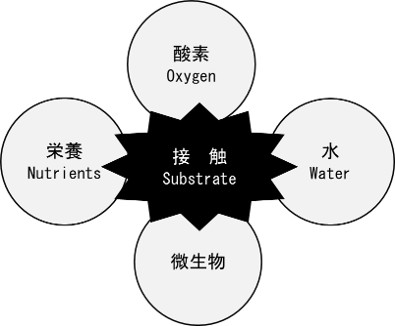
The degradation of oil is oxidative, so an aerobic environment is desirable, and conditions must be arranged so that oxygen supply does not become the rate-limiting factor.
(In theory, for example, about 3 kg of oxygen is needed for the microbial degradation of 1 kg of benzene, one kind of oil.)
We therefore focused on "oxygen supply" as a way to raise microbial activity, and examined in laboratory tests whether an oxygen-releasing compound and a biocatalyst can activate microorganisms.
[Oxygen-releasing compound]
Oxygen-releasing compounds include magnesium-based and calcium-based types. Care is needed with all of them because their pH is alkaline. The oxygen-releasing compound used in this test consists of calcium peroxide, calcium hydroxide and calcium sulfate dihydrate, with a calcium peroxide content of around 30%, and is a non-hazardous product.
[Biocatalyst]
An oxygen-rich water refined from natural organic matter, which can raise microbial activity. The biocatalyst neither releases oxygen from the water nor takes in oxygen from the water surface. By catalytic action it separates oxygen atoms from water molecules, and at the same time the oxygen is taken up at the cell surface of the microorganisms. Because the oxygen in the biocatalyst is not in free form, it cannot be measured as dissolved oxygen.
Section 2
2. Outline of the laboratory tests
The oxygen-releasing compound used is calcium-based and alkaline. pH affects microorganisms, and extreme acidity or alkalinity falls outside their optimum range. We therefore first examined how adding the oxygen-releasing compound changes pH and dissolved oxygen (the preliminary test).
From those results we set the amount of oxygen-releasing compound and ran a microbial culture test with diesel oil (the culture test).
In the culture test we measured pH, dissolved oxygen and total microbial count, and finally observed the oil film. Microbial activation was evaluated from the total microbial count and the state of the oil film.
[Method of the preliminary test]
- 1 L of tap water was placed in a 1 L glass beaker, left to stand for 5 minutes, and pH and dissolved oxygen were measured.
- To ① were added 5 ml of essential-element solution (diluted 10-fold), 2.0 g of nutrient and 2.0 g of the multi-microbial bio-agent TerraZyme (hereafter TerraZyme); after gentle stirring and 5 minutes' standing, pH and dissolved oxygen were measured.
- To ② was added 5 g of oxygen-releasing compound; after gentle stirring and 5 minutes' standing, pH and dissolved oxygen were measured.
- ③ was repeated until the pH exceeded 0.
[Method of the culture test]
Table 1 shows the test series and the amounts of materials used.
Table 1
| Test series | Materials | |||||
| Water | Diesel oil | Oxygen-releasing compound | Multi-microbial bio-agent TerraZyme | Nutrient (N・P・K) | Essential-element solution (diluted 10-fold) | |
| ① Blank | Tap water 400 mL | 0.4g | None | 0.8g | 0.8g | 0.2mL |
| ② Catalyst | Catalyst 400 mL | 0.4g | None | 0.8g | 0.8g | 0.2mL |
| ③ Oxygen-releasing compound 1.5 g/L | Tap water 400 mL | 0.4g | 0.6g | 0.8g | 0.8g | 0.2mL |
| ④ Oxygen-releasing compound 3.0 g/L | Tap water 400 mL | 0.4g | 1.2g | 0.8g | 0.8g | 0.2mL |
- TerraZyme was placed in a 500 ml glass beaker, diesel oil was dripped onto it, and the two were mixed with a spatula until well blended.
- Tap water or catalyst, depending on the test case, was added and the oil-soaked TerraZyme was suspended in it.
- Essential-element solution, nutrient and oxygen-releasing compound were added, and while stirring with a magnetic stirrer an initial sample was taken for measurement of the total microbial count.
- Stirring in ③ was stopped, and after 5 minutes' standing pH and dissolved oxygen were measured.
- After the measurements in ④, the beaker was sealed with film and incubation on the stirrer began.
- After 1, 3 and 5 days, samples were taken and measurements made as in steps ④ and ⑤.
Section 3
3. Test results
3-1. Results of the preliminary test
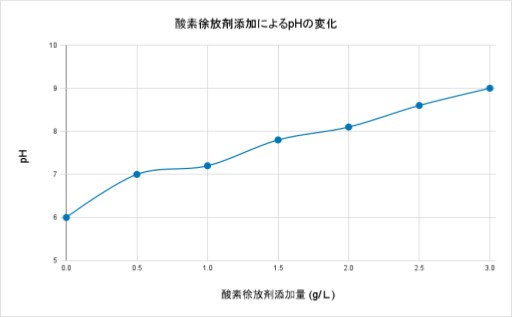
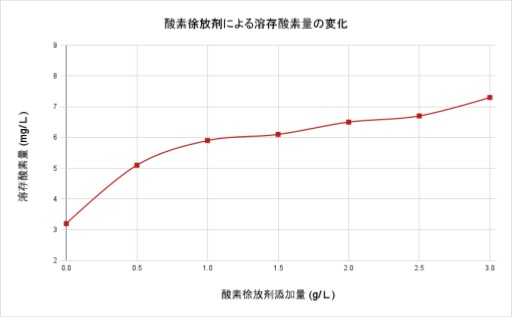
As Figures 2 and 3 show, pH exceeded 9.0 when 3.0 g of oxygen-releasing compound had been added to 1 L of tap water. For the culture test we therefore set two series of oxygen-releasing compound: 3.0 g/L and half that, 1.5 g/L.
3-2. Results of the culture test
Table 2 shows the pH and dissolved oxygen measurements.
In series ③ and ④, with the oxygen-releasing compound, pH rose as the test days passed; in series ④, with 3.0 g/L, pH exceeded 10.0 after 5 days. Dissolved oxygen was higher in series ③ and ④ than in series ① and ②, but not by as much as double.
Table 2
| Series | Item | Just after addition | After 1 day | After 3 days | After 5 days |
|---|---|---|---|---|---|
| ① Blank | pH | 6.31 | 6.62 | 6.72 | 6.34 |
| Dissolved oxygen (mg/L) | 4.87 | 4.39 | 5.36 | 5.23 | |
| ② Catalyst | pH | 6.40 | 7.10 | 7.13 | 6.70 |
| Dissolved oxygen (mg/L) | 7.63 | 8.87 | 9.02 | 8.94 | |
| ③ Oxygen-releasing compound 1.5 g/L | pH | 5.56 | 4.10 | 7.78 | 5.30 |
| Dissolved oxygen (mg/L) | 5.89 | 4.29 | 7.78 | 5.30 | |
| ④ Oxygen-releasing compound 3.0 g/L | pH | 8.25 | 9.51 | 9.83 | 10.09 |
| Dissolved oxygen (mg/L) | 6.44 | 5.09 | 5.90 | 5.70 |
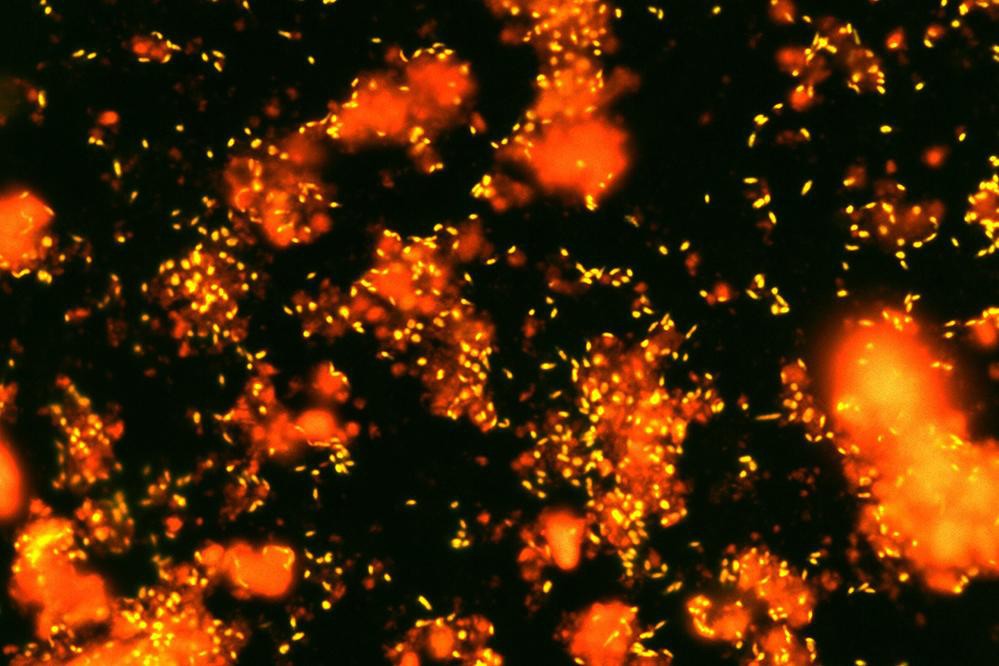
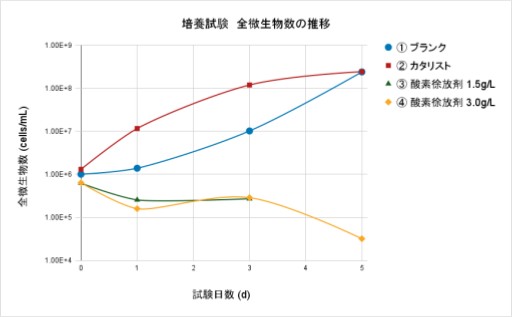
Table 3 and Figure 4 show the total microbial counts. The most marked microbial growth was in series ②, cultured in catalyst rather than tap water: about 8.8-fold after 1 day and close to 100-fold after 3 days, a growth rate ten times that of series ① with tap water. Growth in series ② slowed after day 3, which we attribute to the diesel oil having been degraded.
In series ③ and ④, with the oxygen-releasing compound, on the other hand, no microbial growth was seen and the counts declined. For series ③, after 5 days not a single cell was observed in three measurements of 0.1 ml of undiluted sample, so it is recorded as 0 cells/ml.
Table 3
| Series | Just after addition | After 1 day | After 3 days | After 5 days |
|---|---|---|---|---|
| ① Blank | 1.01E+06 | 1.39E+06 | 1.02E+07 | 2.39E+08 |
| ② Catalyst | 1.31E+06 | 1.16E+07 | 1.19E+08 | 2.43E+08 |
| ③ Oxygen-releasing compound 1.5 g/L | 6.25E+05 | 2.56E+05 | 2.72E+05 | 0.00E+00 |
| ④ Oxygen-releasing compound 3.0 g/L | 6.41E+05 | 1.60E+05 | 2.88E+05 | 3.21E+04 |
(unit: cells/ml)
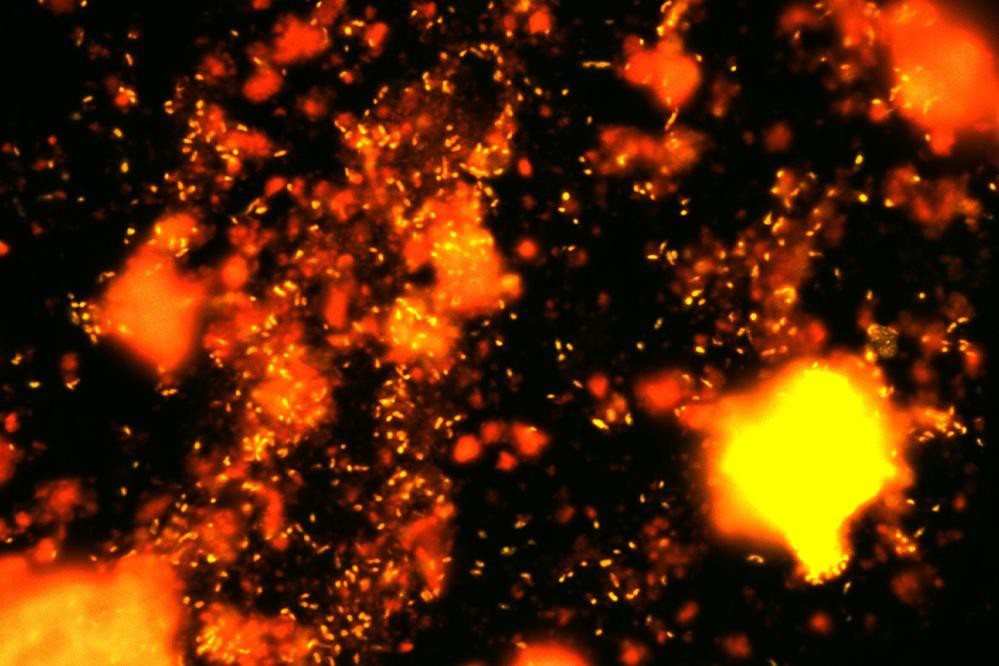
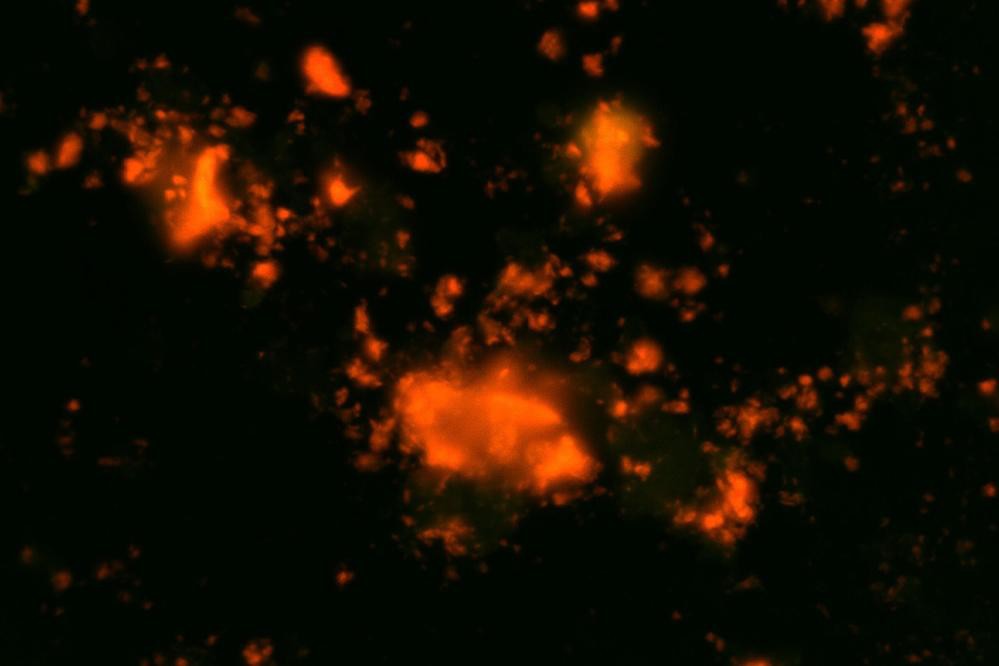
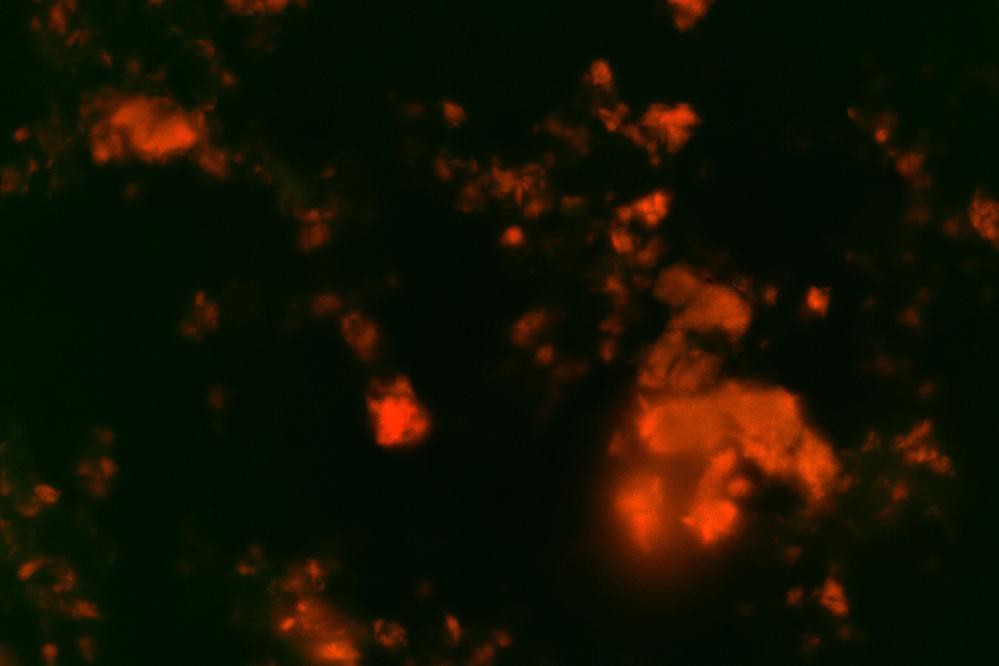
After the measurements on day 5, the oil film on the water surface in each beaker was observed (series ① to ④).
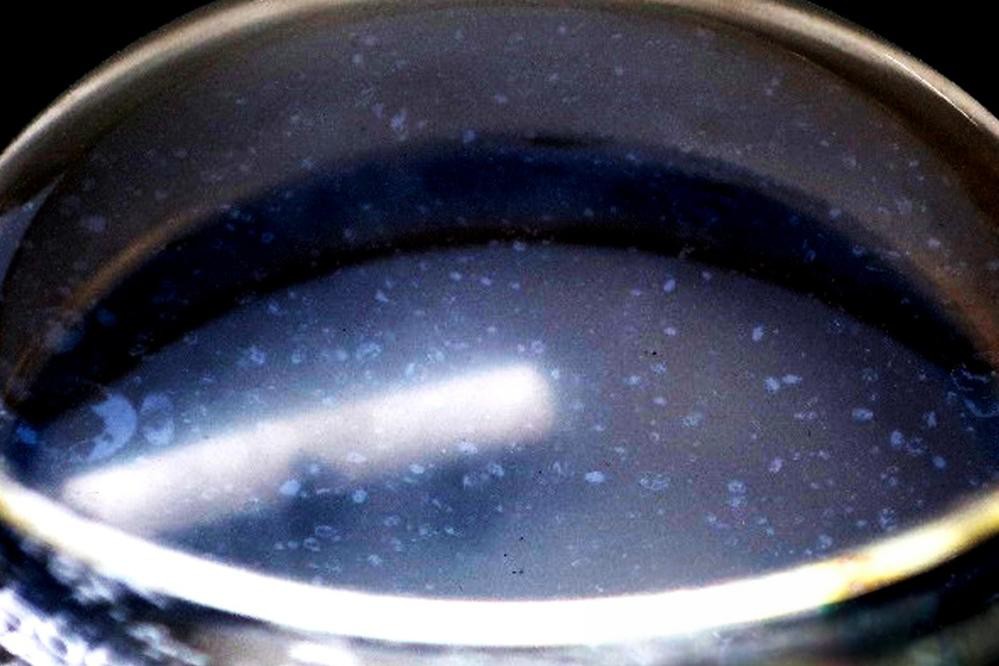
Series ①: in the blank, spots of oil film were seen.
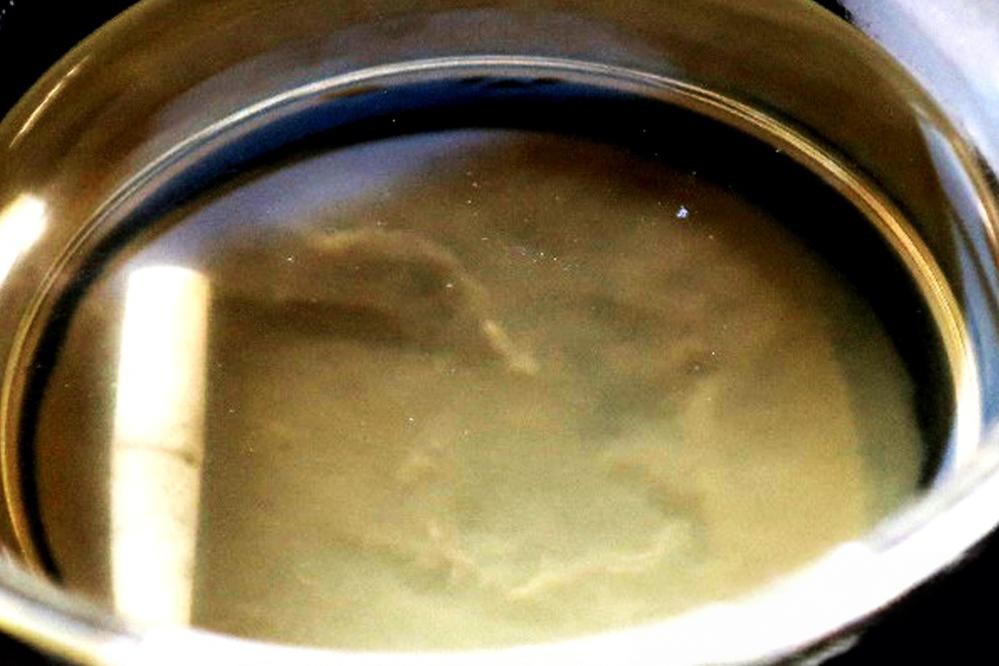
Series ②: with the catalyst there was no oil film and the water was clear.
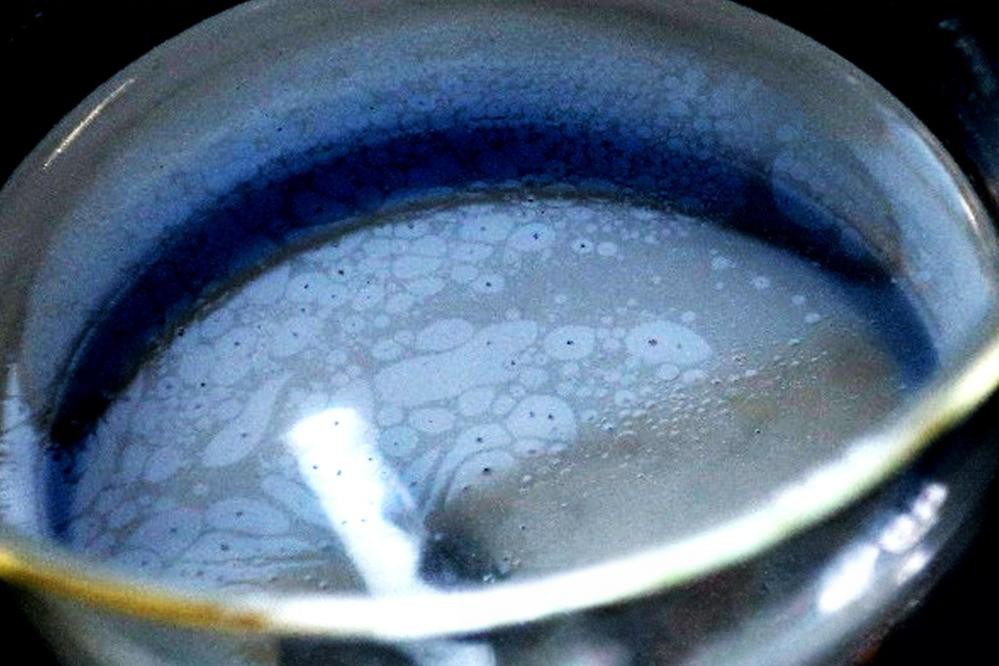
Series ③: oil covered the whole water surface.
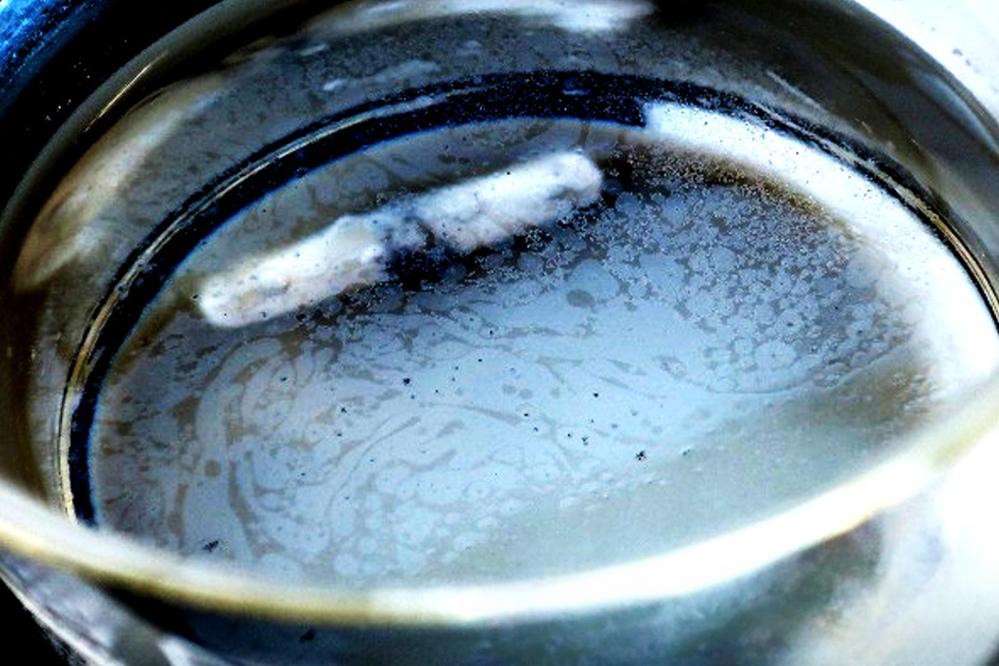
Series ④: oil covered the whole water surface.
Section 4
4. Discussion
The culture test shows that microbial activity was highest in series ②, the catalyst, both from the total microbial counts and from the rapid degradation of the oil and disappearance of the oil film. Dissolved oxygen in series ② was lower than in the other series after the start of the test, which we attribute to greater consumption of dissolved oxygen because the microbial count was higher than in the other series.
With the oxygen-releasing compound, whose role is to supply dissolved oxygen, pH rises as the dose increases and goes beyond the optimum range for microorganisms, so once pH is taken into account it could not secure a dissolved oxygen level that would give it a decisive advantage over the other series. In the two series with the oxygen-releasing compound the microbial count fell markedly; possible causes are the effect of pH and of the calcium sulfate dihydrate in the compound, but this test did not pin down the cause.
The blank, series ①, took longer than series ② for microbial growth and oil degradation, but it can be said to have had sufficient microbial activity.
Section 5
5. In closing
In oil bioremediation, raising microbial activity leads to faster and more certain remediation. These laboratory tests showed that the biocatalyst is effective as one way of raising microbial activity. The biocatalyst creates an environment that helps microorganisms multiply and prevents the oxygen depletion that comes with microbial growth. Nor does it bring about any great change in pH.
Oil bioremediation is a low-cost, environmentally friendly remediation method. Japan has no regulations on oil to begin with, yet the reality is that even to remove oil odour and oil film, concern about the schedule leads to methods such as excavation and removal or lime mixing, which burden the environment and cost a great deal. If bioremediation with a biocatalyst can make a mark on this reality, a path out of environmental backwardness may come into view.
See also
Related pages
Treatment Methods
Soil and groundwater remediation methods
Six remediation methods and how to choose by site conditions.
Testing & Monitoring
Testing and monitoring
From the treatability test to monitoring through completion.
Achievements
Track record
Remediation projects across all 47 prefectures and overseas.