
Landfarming
Landfarming
Landfarming is a method in which relatively shallow contaminated soil is excavated, gathered at a designated location, and then sprayed with a solution containing the microbial product and nutrients, and mixed. The contaminated soil is dug up and periodically turned with equipment such as a backhoe, which improves the contact efficiency between the contaminants and the microbes while at the same time supplying oxygen to promote remediation. This method requires heavy machinery for the mixing work, such as a backhoe, and sufficient site space in which to carry out the operation.
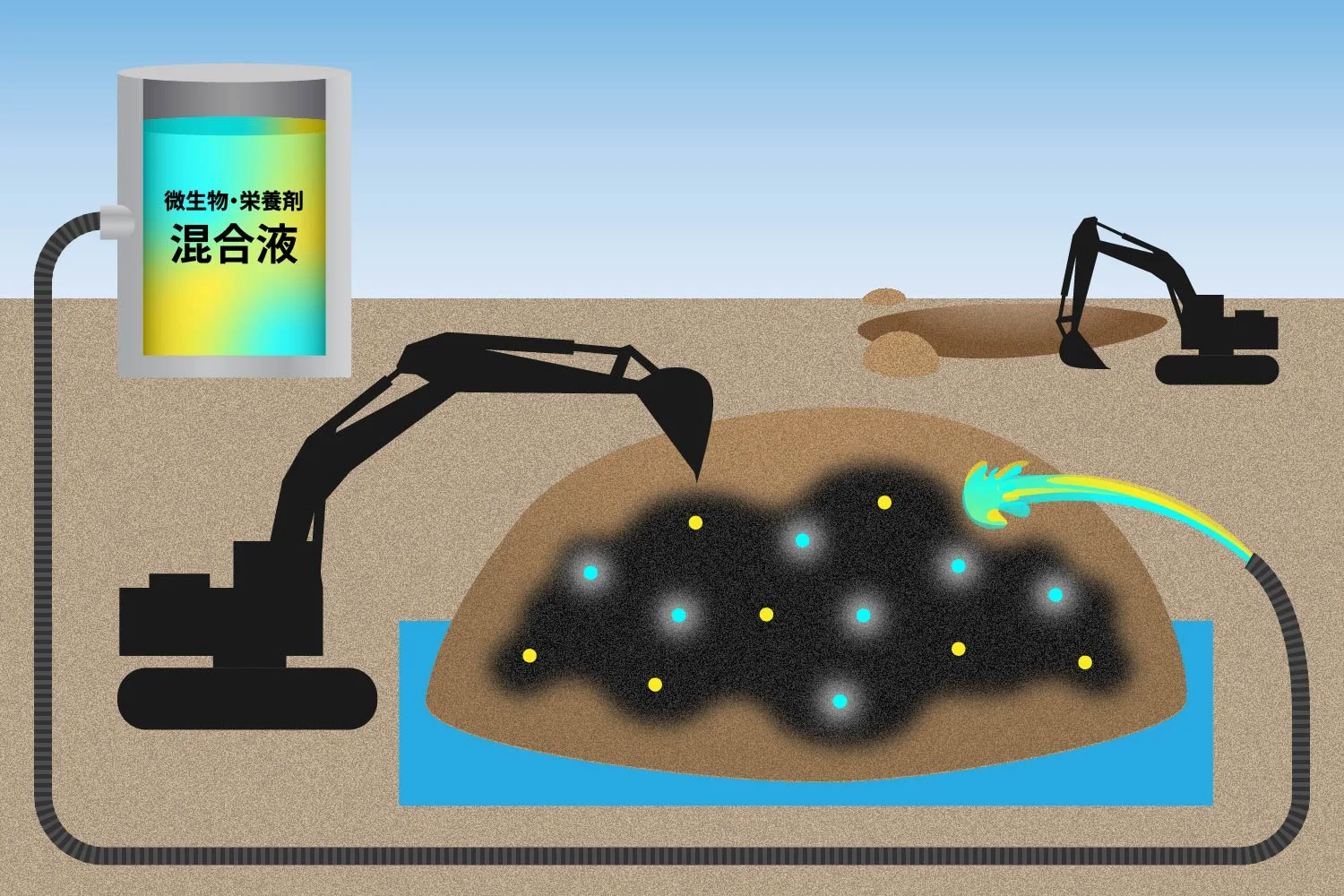
Biopile
Biopile
Biopile is an enhancement technique used in addition to landfarming. Contaminated soil that has been sprayed with a solution containing the microbial product and nutrients is stacked into piles, and outside air is drawn in through piping buried inside to supply oxygen into the soil, further boosting the activity of the microbes and promoting the breakdown of contaminants. It is a technique adopted in combination with landfarming when more efficient remediation is desired.
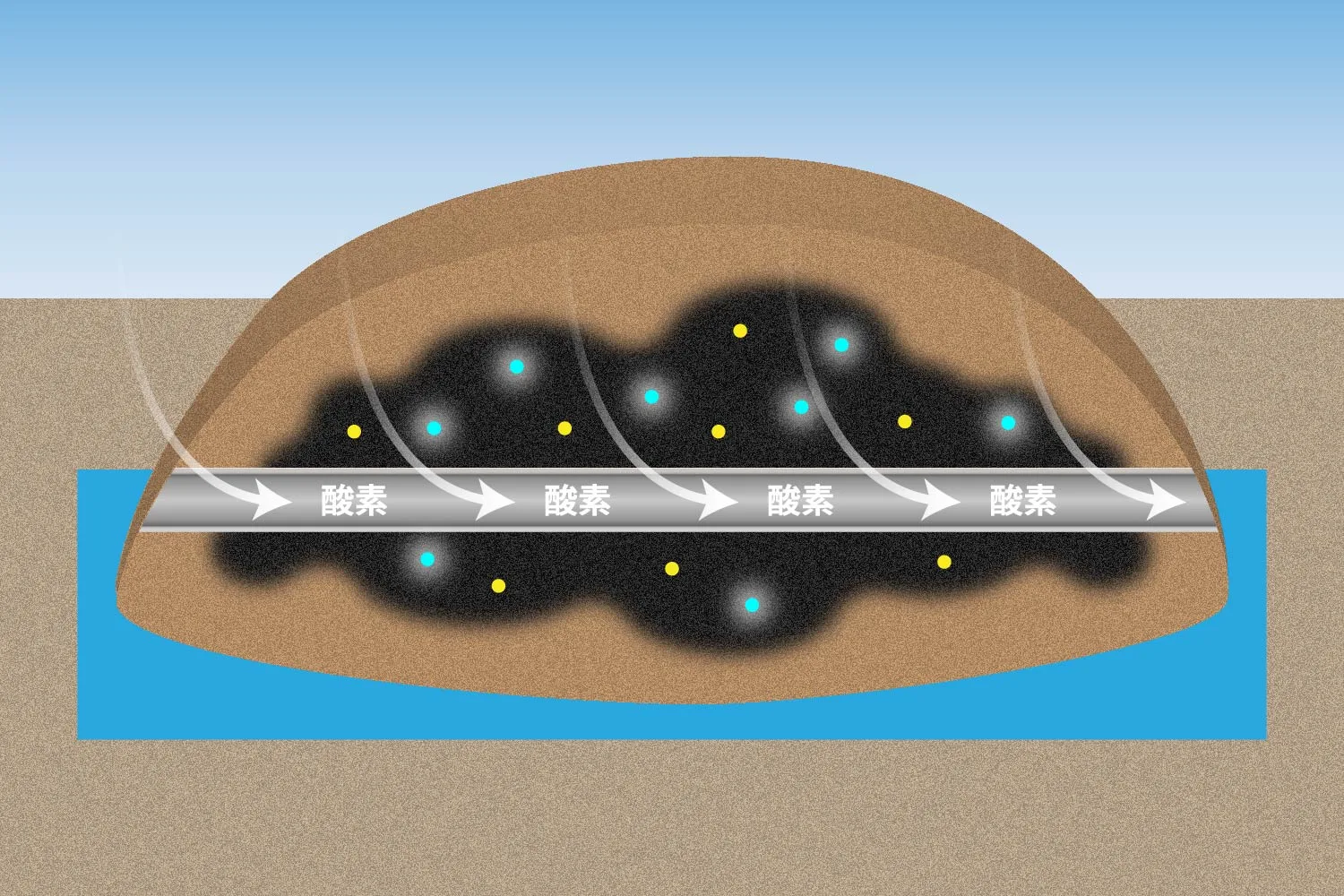
In-situ Mixing
In-situ Mixing
In-situ Mixing is a method in which relatively shallow contaminated soil is sprayed with a solution containing the microbial product and nutrients and mixed directly with equipment such as a backhoe. Periodic mixing improves the contact efficiency between the contaminants and the microbes while supplying oxygen to promote remediation. Because the soil does not need to be excavated or moved, remediation is possible even without a large site.
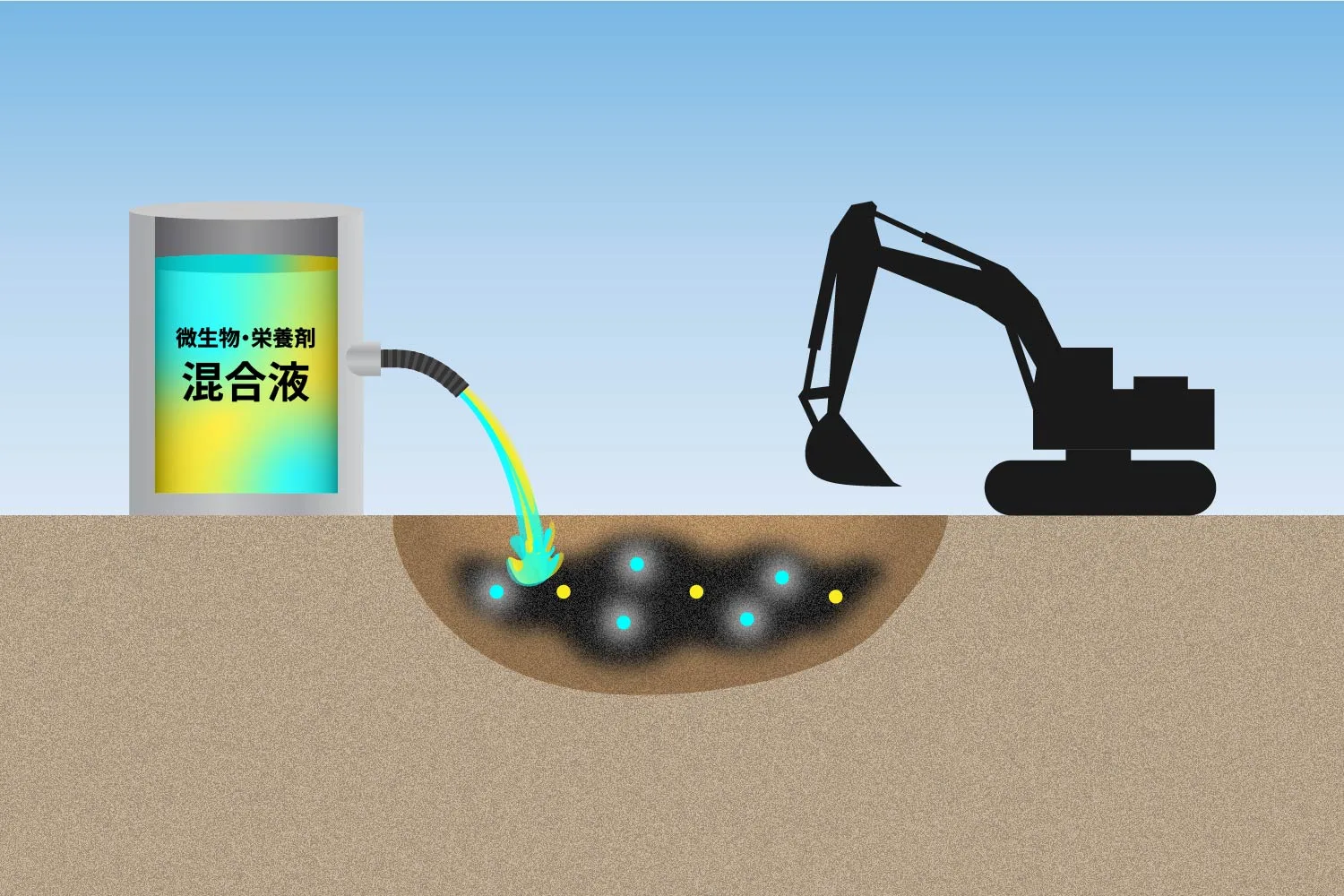
Direct Injection
Direct Injection
Direct Injection is a method that allows contaminated soil to be remediated without excavation. Using equipment such as a boring machine, a solution containing the microbial product and nutrients is injected directly, creating an environment underground in which microbes can act. Work is possible even when there are buildings or structures above the target soil, making it an effective technique for facilities in operation or for sites with constraints.
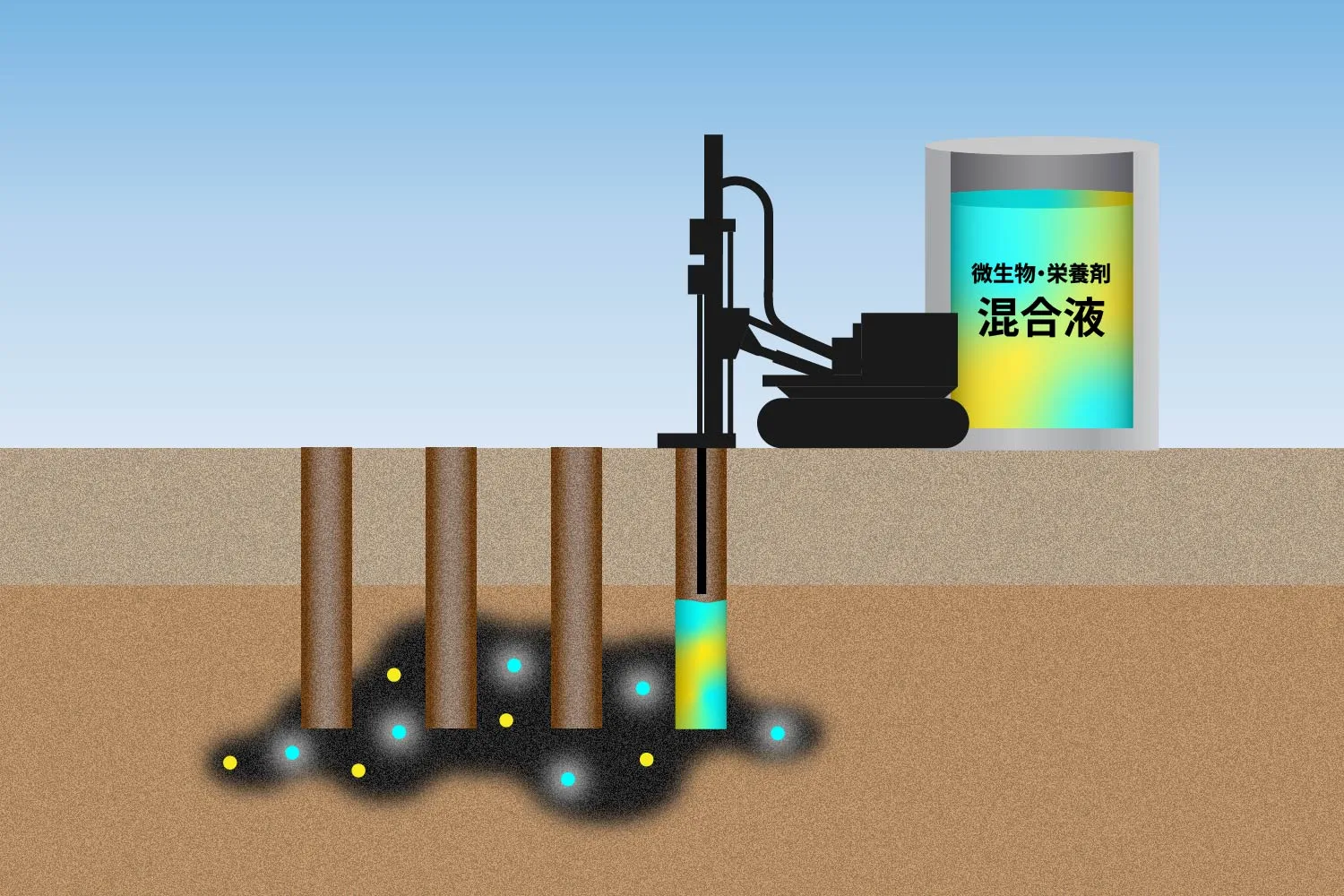
In-situ Well Injection
In-situ Well Injection
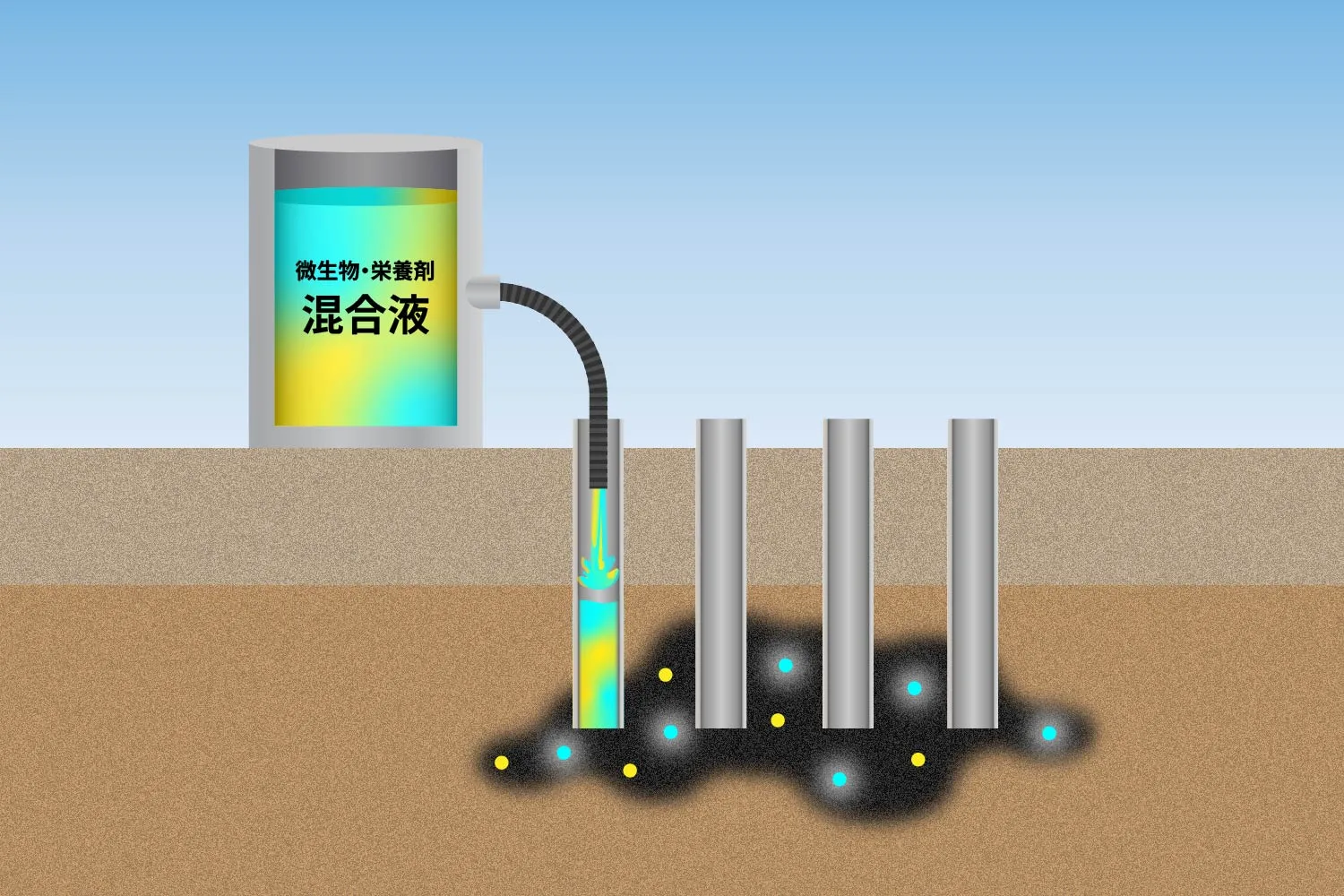
In-situ Well Injection is a method that uses wells or monitoring boreholes to inject a solution containing the microbial product and nutrients into the ground. Because existing wells and boreholes can be used as they are, remediation can be carried out even at facilities in operation.
Bio Reactor (Patented)
Bio Reactor
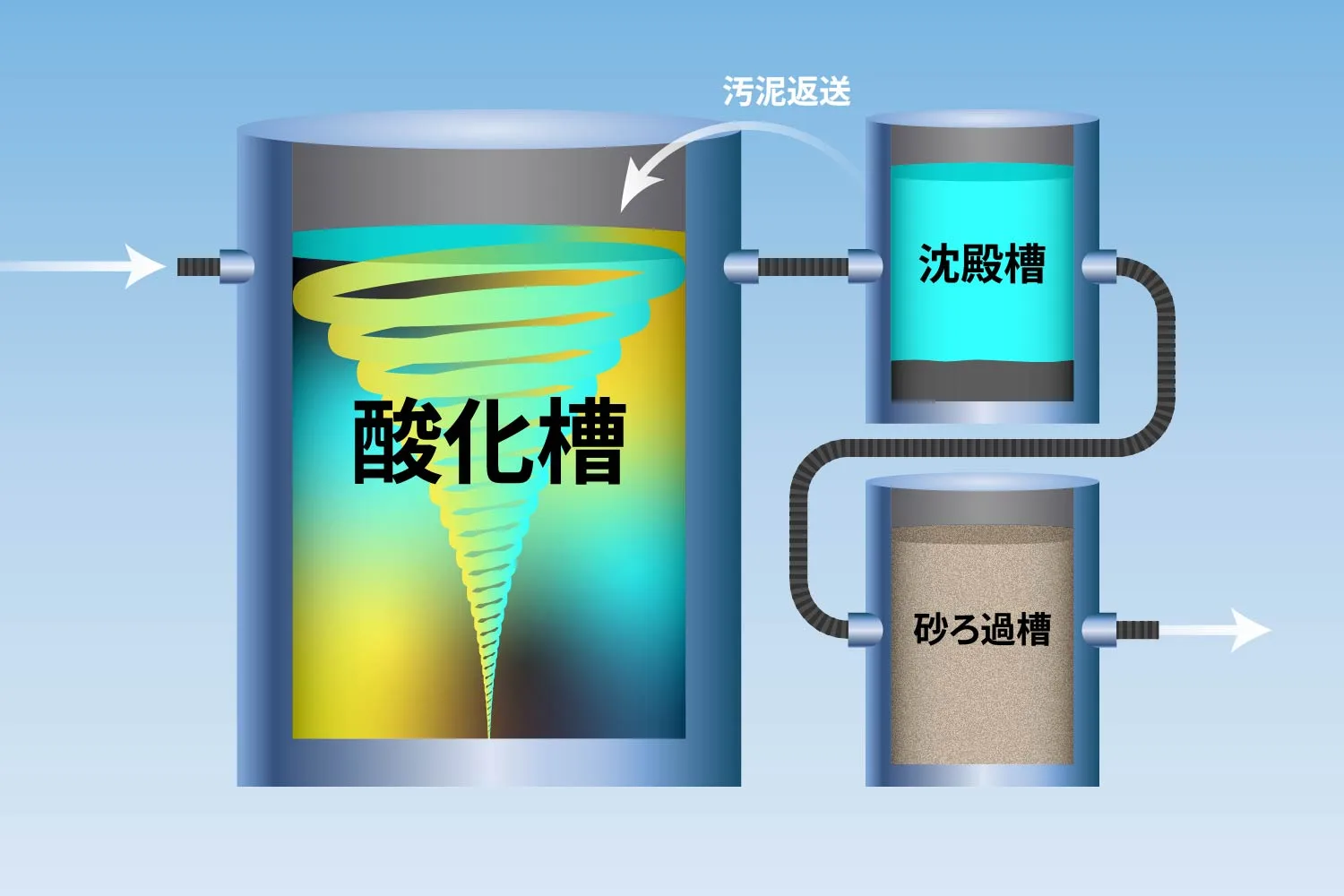
The Bio Reactor is a biological remediation system that combines the composite microbial product “the Oppenheimer Formula” with a proprietary oxidation tank to efficiently break down oil, VOCs, and other contaminants. In the oxidation tank, a vortex flow vigorously agitates the oil, microbial product, nutrients, and oxygen to promote microbial breakdown; in the settling tank, the microbes (sludge) are separated from the treated water, and sludge return stabilizes the microbial population, yielding clear treated water. Its sealed structure prevents volatilization, and it can handle a wide range of sites — from groundwater remediation to wastewater treatment, including wastewater containing hydrogen sulfide.
Suited products
FAQ
Frequently asked questions
How do you choose the method?
We look at the depth and extent of contamination, the soil and groundwater, whether buildings or equipment sit on the site, whether excavation is possible, whether the facility can be shut down, and the required schedule and target values. The method and quantities are then fixed together with the treatability test results.
Related page: Treatability testing: the basis for choosing a method
Can you remediate without excavation?
Often, yes. In-situ injection (direct or through wells) delivers the microbial product and nutrients through boreholes or wells, with no digging. It can be carried out under buildings and at operating facilities. For shallow contamination, in-situ mixing on the spot is another option.
Related page: In-situ direct injection
What is the difference between landfarming and a biopile?
Landfarming spreads excavated soil out, sprays it with a solution of microbial product and nutrients and turns it. A biopile heaps that soil up and blows air through pipes inside it to speed degradation. It suits sites where space is limited.
Related page: Biopile
What is the bioreactor?
Our patented system in which contaminated groundwater or wastewater is brought into contact with the microbes inside a tank so the oil is degraded. It is used when groundwater is pumped up for treatment, and for factory wastewater.
Related page: Bioreactor
Do you combine methods?
Yes. Soil may be treated by landfarming while groundwater is treated by injection, or excavation may be combined with in-situ remediation to reduce the volume dug up. The balance of site conditions, schedule and cost decides.
Related page: Remediation track record