
OVERVIEW
A complex contaminant
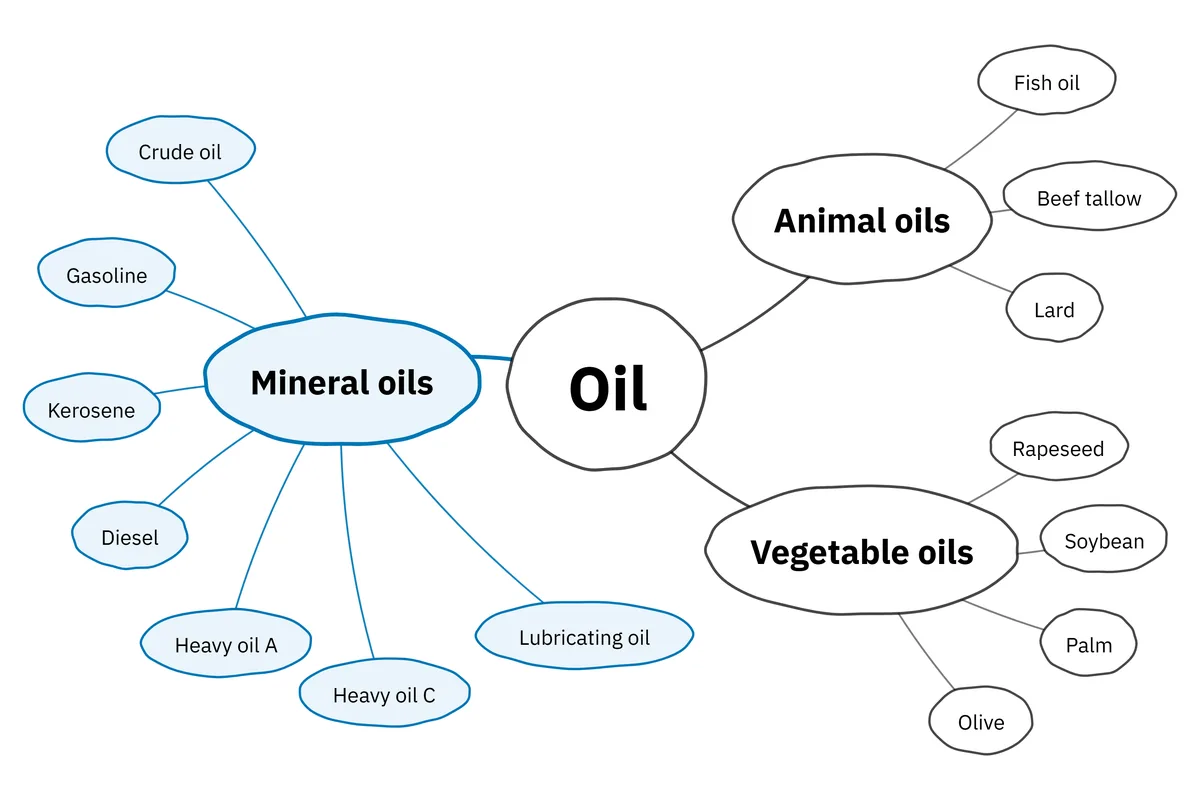
Oils include vegetable oils, animal oils, and mineral oils, but in the field of soil and groundwater contamination, "oil contamination" mainly refers to contamination by petroleum hydrocarbons (mineral oils). Petroleum hydrocarbons are the main components of petroleum products such as gasoline, kerosene, diesel, and heavy oil, and they are mixtures in which multiple chemical substances coexist. They behave in complex ways in the environment: volatile components migrate into and dissolve in groundwater, while heavier components persist in the soil for long periods. They may also contain harmful aromatic hydrocarbons such as benzene, which is why oil contamination is regarded as a significant issue from the standpoint of health and environmental risk. Bioremediation harnesses the ability of microbes to break these hydrocarbons down into water and carbon dioxide, making it possible to remediate oil contamination at low cost and with little environmental burden.
BY COUNTRY
A comparison of regulations
Is this really acceptable, Japan?!
Among the G7 and OECD member countries, the only nation with no legal standards for TPH (petroleum hydrocarbons), BTEX (benzene, toluene, ethylbenzene, xylene), and PAHs (polycyclic aromatic hydrocarbons) in soil and groundwater is Japan.
- Qualitative criteria: judgments rely on human senses, such as "does it smell?" or "is an oil sheen visible?"
- No concentration standards: there is no quantitative threshold defining "a problem above X mg/kg"
- Not a health-risk framework: handled instead under the separate concept of "impairment of the living environment"
- Carcinogenic PAHs effectively unchecked: substances such as benzo(a)pyrene are treated as "OK as long as there is no odor"
Country comparison
A comparison of regulatory coverage of petroleum hydrocarbons by country
The ten major countries and regions listed here regulate all six items. In Japan, only benzene is regulated.
| Substance | Major countries and regionsEU, United States, Canada, Australia, China, South Korea, Taiwan, Malaysia, Singapore, Thailand | Japan |
|---|---|---|
| TPH | Regulated | Not regulated |
| B: Benzene | Regulated | Regulated |
| T: Toluene | Regulated | Not regulated |
| E: Ethylbenzene | Regulated | Not regulated |
| X: Xylene | Regulated | Not regulated |
| PAH | Regulated | Not regulated |
COMPOSITION
How petroleum products are made
The main components of petroleum are hydrocarbons composed of carbon and hydrogen, and it is a composite (mixture) in which many types of hydrocarbons coexist. The hydrocarbons contained in petroleum range widely, from C1–C4 (gaseous at room temperature) to C50 and above (from low to high molecular weight), with boiling points spanning from room temperature to over 700°C. The constituents consist mainly of aliphatic fractions and aromatic fractions, and by refining, fractionating, and blending these at a refinery, various petroleum products such as gasoline, kerosene, diesel, heavy oil, and lubricating oil are produced. Because the refining process is complex, the composition differs from product to product.
Oil is a mixture of hydrocarbon molecules. The more carbon atoms a molecule has (its carbon number, C), the higher its boiling point. Light components with few carbons evaporate readily; heavy components with many carbons are more viscous and tend to stay in soil and groundwater.

| Product (carbon number) | Approx. boiling range | Character |
|---|---|---|
| Gasoline (C4–C12) | approx. 35–180°C | Light and volatile. Strong odour; contains benzene and other BTEX |
| Kerosene (C8–C16) | approx. 170–250°C | Fairly light and volatile. Contains xylene |
| Diesel / Class A heavy oil (C10–C26) | approx. 240–350°C | Medium. Less volatile than gasoline or kerosene (Class A heavy oil is diesel with residue added) |
| Class C heavy oil (C20–C44) | approx. 350°C and above | Heavy and viscous. Barely evaporates; tends to remain in soil |
| Lubricating oil (C28–C44) | approx. 350°C and above | Heavy, barely evaporates. Tends to remain in soil and groundwater |
GasolineMade mainly of petroleum hydrocarbons in the C4–C12 range, and contains BTEX (benzene, toluene, ethylbenzene, xylene). High-octane gasoline (premium gasoline) contains about 24% toluene, added to raise the octane rating.
KeroseneMade mainly of petroleum hydrocarbons in the C8–C16 range, and contains xylene.
Diesel / Class A heavy oilMade mainly of petroleum hydrocarbons in the C10–C26 range; diesel with residue added becomes Class A heavy oil (about 90% diesel, about 10% residue). For tax reasons, coumarin is added to Class A heavy oil.
Articles
Related articles
Vol. 4
Oil-Contaminated Soil and Groundwater Remediation with the Multi-Microbial Agent Oppenheimer Formula™
Vol. 5
Soil and Groundwater Standards in Asia: PAH Degradation Tests with the Multi-Microbial Bio-Agent Oppenheimer Formula™
海外動向